Israeli High Court Outlaws Detention Centre for African Migrants

The Israeli high court on Monday, 22 September 2014 ordered for the closure of a detention facility for African migrants.

South African Immigration Chief Assures Zimbabweans over New Visa Rules

South Africa’s Immigration Director Apleni Mkuseni has sought to calm Zimbabwean migrants in the country regarding the new visa rules introduced in late May.

'Leave No One Behind:' Joining Hands in the Fight against Poverty in Kenya

17 October 2014, is the International Day for the Eradication of Poverty, which is to be commemorated at the United Nations (UN) headquarters in New York, USA. This calendar event has been observed for the past 21 years after the UN General Assembly earmarked it as a day to increase awareness on the importance of eradicating poverty and destitution worldwide

Council Established to Boost Investments by Kenyan Diaspora

The Kenyan government will soon form a council that will enhance the business activities of Kenyans in the diaspora and provide them with increased opportunities to reap additional benefits from their earnings in their countries of destination.

In Search of Happiness: The Link Between Migration, Economic Growth and Happiness

Are people happier when they move to another country? Migration and happiness hasn’t been studied much. The few available studies have concentrated mainly in the developed countries.

Showing posts with label articles of migration. Show all posts

Monday, 17 November 2014

In search of Happiness: The Link between Migration, Economic growth and Happiness


By George Awalla (georgeawalla@gmail.com )

Are people happier when they move to another country? Migration and happiness hasn’t been studied much. The few available studies have concentrated mainly in the developed countries. The World Migration Report 2013 (WMR 2013) released by the International Organization of Migration (IOM) was a whiff of fresh air. It is a candid and lively report that shows that most migrants find themselves in a situation of lowered social status when they move.  They generally remain less happy than the native population even many years after migration.

Some migrants —despite being economically successful — may nevertheless find their relative position in the destination country lower than it was in their country of origin. Those with good educational qualifications and careers prior to migration may find that these achievements are not recognized in the destination countries. They may encounter discrimination and language barrier. Separation from family and the challenge of adjusting to a new culture also leads to lower levels of happiness as compared to the native population.

Comparing happiness levels among migrants and native population in destination countries is perhaps not the best way of assessing whether migrants’ happiness has changed as a consequence of moving to another country. Apart from anything else, there may be engrained differences in the happiness levels of populations in different countries which could skew findings. The well-being of migrant families back at home contributes to the migrant’s happiness levels abroad. The circumstances that led to migration are also critical in regards to well-being or happiness of the migrant. Refugees and displaced persons find bigger challenges to surmount than individuals who migrate by choice, for economic reasons or pleasure.
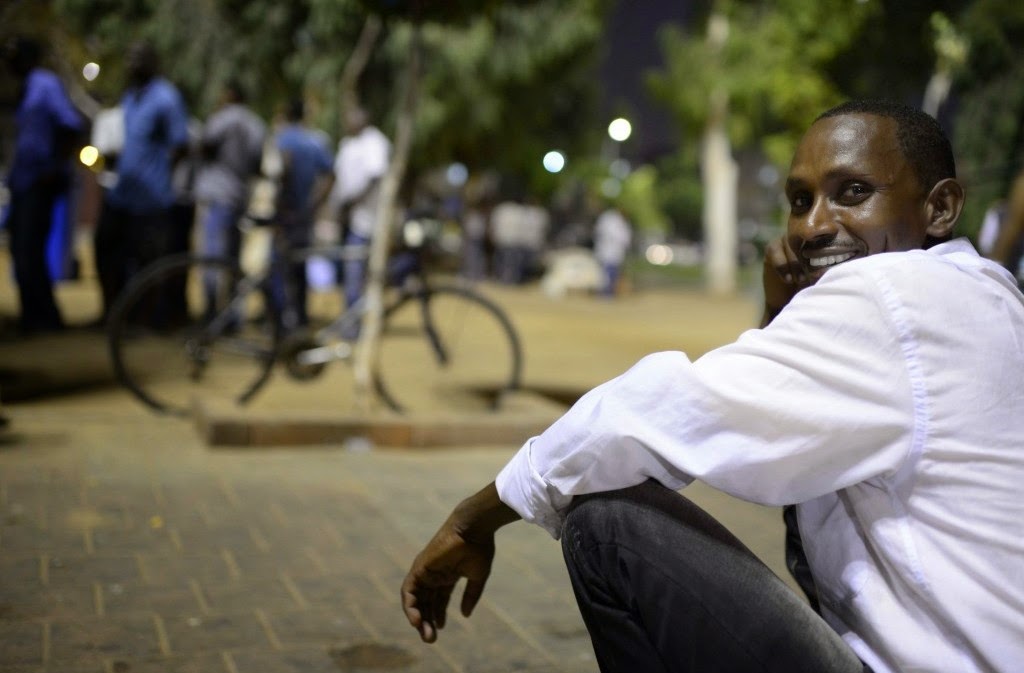
Migration and happiness: Does happiness levels differ for migrants from developed and developing countries (Image Credit. www. timesofisrael.com)
  
WMR 2013 reaffirms the divide between the rich and poor: the North - South divide. Whether migration improves well-being depends on where the migrants come from and where they go to. Migrants moving from North-North appear to have the easiest experience. These migrants have the most positive outcomes in multiple dimensions for well-being, such as life satisfaction, emotional positivity, financial security, personal safety, community attachment and health. 

By contrast, South-South migrants appear to face more significant challenges, they are the least optimistic about their lives and find it difficult to achieve as satisfactory standard of living. Furthermore, migration seems to make little difference to them financially. These migrants tend to lack confidence in the institution of the country they have moved to and tend to be troubled by their health — personal safety and health are major concerns for them.

Those migrating from North–South enjoy greater financial prowess; most of them are retirees or those who want to establish businesses in warmer climates as a safety net for old age. They also struggle to make the transition but they nevertheless end up better off financially having migrated than those who stayed home.
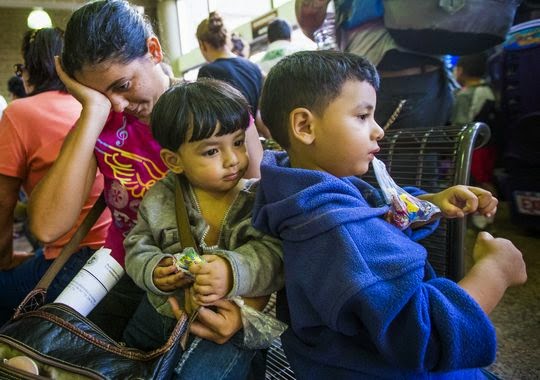
South-south migrants face alot of challenges and hence are less happy than North-North migrants (Image Credit: www.usatoday.com)

As the sun sets on the MDGs and rises on the Sustainable Development Goals post 2015, there is growing debate on whether and how migration gets integrated into the development agenda within the new global framework. A much stronger evidence base is needed to understand better the linkages between migration, development and happiness. The World Migration Report 2013 recommends the development of an ongoing ‘Global Migration Barometer’ survey to regularly monitor the well-being and happiness of migrants across the globe. It would be nice to migrate if you know the facts.

Researchers have also shown deep interest in exploring how income affects happiness or personal wellbeing. Some researchers contend that – at least above a certain threshold – an ever-higher income contributes little to happiness. Findings from the Organisation for Economic Cooperation and Development (OECD) and the UK Government’s Measuring National Wellbeing Programme (MNW) found that despite the increasing financial hardships since the 2008 economic crisis, levels of self-reported life satisfaction have remained broadly stable throughout the last decade. 

It is not the absolute purchasing power of income that matters, but the way it embodies and signals status. Those with higher incomes are happier than those with less, partly due to ‘social comparisons’ — the ability to compare favourably with others, and to enjoy a perceived higher status. Researchers have also found that comparisons tend to be relatively ‘local’; people compare their wealth and status with people around them, rather than with those from different contexts or countries. 

Inspirational thinking is another factor. People continue to pursue higher income whether poor or relatively well off (rich).  Those who gain higher incomes soon start to compare themselves with those in a higher income bracket instead of gaining satisfaction. The ‘keeping up with Joneses’ mentality  quietly creeps in, and the desire for ever more income becomes insatiable, and the individuals revert back to previous levels of wellbeing and happiness.

In the development context, these studies suggest a broad alignment between Gross Domestic Product (GDP) and happiness — for instance, Western Europe is higher up the scale than Africa – but correlation is not absolute and there are anomalies with developing countries, such as, India and  Mexico being similar to or higher than Japan in their happiness ranking. In 2010, Easterlin R.A and fellow researchers wrote a scientific paper titled The Happiness – Income Paradox Revisited that was published by the National Academy of Sciences.  The researchers said that over the long term (more than 10 years), economic growth does not bring greater happiness. China, in particular, reportedly has massively grown in GDP in recent times but happiness has remained unchanged. 

In 2003, immediately after the NARC government came to power, Kenyans were reported to be happier and more optimistic although there was neither a significant change in the shillings in their pockets nor plates of ugali in their homes. Next door, Tanzania has seen relative growth in happiness despite little or no significant economic growth.

Although there is contradictory evidence from different studies, the overriding message seems to be the same; as far as the world’s poor countries are concerned, economic development is a prerequisite in terms of meeting the basic needs and rights of citizens and enabling them to lead fulfilled lives with greater happiness and well-being.

Other well researched dimensions of happiness include health, social networks, familial relations and employment.  Having a job, a spouse or a partner are particularly important happiness factors as well as participating in social activities. Being religious is good for happiness; it may be cool. Another key determinant is the perception that one’s health is good (subjective health). Age is also a critical factor – younger people are happiest, followed by old people. Mid-life seems to be a crisis period – long drawn sulky faces.  No doubt happiness is a combination of both intrinsic and external factors.

About the author
Mr. George Awalla is the Head of Programmes at VSO Jitolee, an affiliate of the international VSO Federation whose prime mandate is to promote volunteerism in tackling global poverty as well as enhancing the participation of disadvantaged members of the society in political and socio-economic development. He is also a social commentator and a columnist with the Governor Magazine; a monthly publication that covers county issues with a fresh perspective


Wednesday, 1 October 2014

Israeli High Court Outlaws Detention Centre for African Migrants


The Israeli high court on Monday, 22 September 2014 ordered for the closure of a detention facility for African migrants. The court further directed that close to 2,000 inmates currently held at the facility — known as Holot Residency Centre — be released within the next 90 days.

The court ruling was in response to an appeal by human rights groups against the decision by Israel’s parliament (Knesset) to enact a law that authorised the indefinite incarceration of migrants — mostly from the Sudan and Eritrea.

The law, which was passed in December 2013, allowed for the detention of illegal African immigrants for up to one year without trial. Proponents of the law had cited the migrants as illegal job seekers whereas it opponents had defended the migrants as asylum seekers who were escaping persecution and hardships in their countries.

The Knesset’s decision sparked widespread protests by tens of thousands of African refugees who wanted the former to rescind the decision. Efforts by close to 10,000 African refugees to seek audience with the speaker of Knesset were unsuccessful after they were barred from accessing parliament buildings. 
 Protests by these immigrants fell on deaf ears as the Knesset refused to rescind its decision (Image cerdit: www.forward.com)
Seven judges out of the nine-judge bench that presided over the case agreed that incarceration of the migrants would be a gross violation of their rights to freedom in addition to infringing on their right to dignity.

Justice Uzi Vogelman, one of the seven judges who argued for the closure of the detention centre, stated that under the circumstances, there was no option other than to order for the repeal of the law. “The measure is disproportionate and unconstitutional. There is almost no right that isn’t violated as a result of incarceration,” Justice Vogelman stated.

Reacting to the ruling, Bill Frelick, the Refugee Programs Director at Human Rights Watch urged the Israeli government to comply with the order. “The Israeli government should treat the people it locks up with basic dignity,” Frelick added.

However, Gideon Sa’ar, Israel’s Interior Minister, criticised the ruling adding that it would be hard to accept the ruling. “This is a mistake that means we cannot achieve a Jewish democratic state because our borders will be infiltrated by the illegal immigrants,” Sa’ar claimed.

Construction on the Holot Residency Centre began in 2012 in the Negev desert and was meant to house close to 8,000 migrants. The facility accommodated both male and female migrants including children and initially detained them for up to three years before deportation to their countries of origin. However, refugees from Sudan who could not be deported would be detained indefinitely. 
Refugee camp or detention centre? The Holot Residency Centre (Image courtesy of www.newsdaily.com)
 In September 2014, a Human Rights Watch report criticised Israeli authorities for using an unlawful coercion policy to force close to 7,000 African asylum seekers to return home — of this number, 6,400 were Sudanese whereas 367 were Eritreans. These actions, according to the report, put the returning refugees at the risk of torture and imprisonment in their home of countries.

According to the United Nations High Commission for Refugees (UNHCR), Eritreans constitute the largest number of asylum seekers in Israel. Its statistics indicate that there were over 37,000 Eritrean asylum seekers in the country as at 2012; up from over 31,000 recorded in 2011. During the same period (2012), there were over 10,000 Sudanese asylum seekers up from 9,000 in 2012.


Friday, 11 July 2014

South African Immigration Chief Assures Zimbabweans over New Visa Rules


South Africa’s Immigration Director Apleni Mkuseni has sought to calm Zimbabwean migrants in the country regarding the new visa rules that were introduced in late May. Mkuseni has urged them to be patient and avoid panicking as the South African government deliberates on their status. 

More than 250,000 migrants from Zimbabweans stand the risk of losing their jobs in South Africa upon the expiry of their special permits in December 2014. There are also fears of mass deportations if no consensus is reached with the Department of Home Affairs regarding the fate of these Zimbabweans. 

The permits — mainly for study and work purposes — were granted under the Special Dispensation period in 2010 in which Zimbabweans working illegally in South Africa were given a chance to regularise their stay in the country. This was in the aftermath of the political upheavals in Zimbabwe, which saw over two million people flee to the neighbouring South Africa. Upon the expiry of the permits, those affected can apply for renewal but would have to do so from Zimbabwe. 

Fears have heightened after Zimbabwean Home Affairs Minister Kembo Mohadi stated that the government could only offer permits to foreigners who seek to work in Zimbabwe. “As far as I am concerned, Zimbabweans who wish to work in South Africa cannot apply for permits in Zimbabwe. They must do so in South Africa,” he explained. 
Zimbabwean nationals in South Africa queuing to process their paperwork for residency (Image Credit: www.nehandaradio.com)
However, Braam Hanekom, the Director of People Against Suffering Oppression and Poverty (PASSOP), expressed optimism that deliberations with the South African government would bear fruit. “We plan to engage the government to understand the details as well as the logistics. We will see if there is an alternative way for those affected to renew their permits by not returning to Zimbabwe,” he assured. PASSOP is a human rights NGO that fights for the rights of asylum seekers, immigrants and refugees in South Africa. 

According to Prof. Loren B. Landau, Director of the African Centre for Migration and Society (ACMS), Zimbabweans constitute the largest single group of foreigners in South Africa whereas there are significant portions of Basotho and Mozambicans. He, however, concedes that the data obtained from various sources is often unreliable adding that there are no precise figures for the number of Zimbabwean nationals in the country. 

On the other hand, a report in 2012 titled Documented Immigrants in South Africa, by Statistics South Africa (StatsSA) reveals that over 24,000 Zimbabweans were issued with temporary residency permits by the Department of Home Affairs in 2012. Only 251 Zimbabwe nationals applied for permanent residency in South Africa, which were processed by the same department. 

One of the changes to the visa rules is that of the Life Partner and Spouse visas, which decree that couples seeking a permanent or temporary residency permit will have to attend an interview concurrently — at the same time and date to establish the authenticity of their relationship. The application period for people who want to change their visa status while still in South Africa has also been extended from 30 to 60 days, which would negatively prolong the approval process. 

It will also be impossible for foreigners in possession of a visitor’s visa to apply for temporary residence permit while in South Africa. They would have to leave the country and apply for the permit from their country of origin. Those whose visas have expired and choose to overstay may be banned by being labelled as undesirable persons for minimum and maximum periods of 1 and 5 years respectively.